
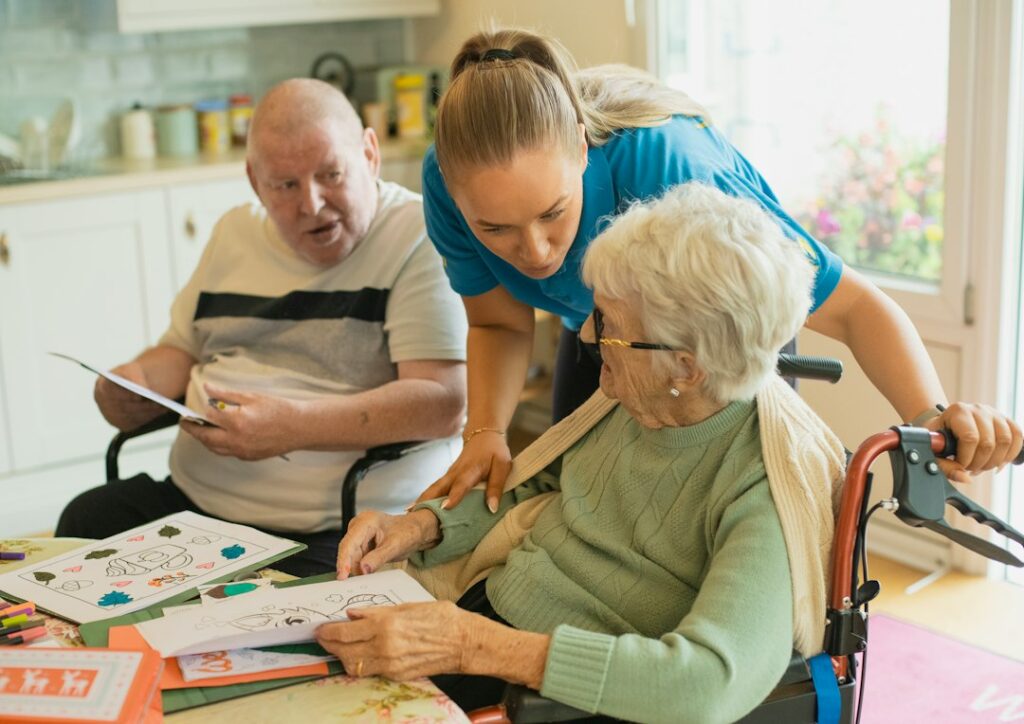
Volunteers can make assisted living feel more connected, purposeful, and personal. They may spend time talking with residents, assist with approved activities, share creative skills, or help strengthen ties between the residence and the surrounding community.
Volunteer roles vary by residence and by the needs, interests, and abilities of the people who live there. Volunteers add support and companionship, but they do not replace licensed staff or take over responsibilities that require professional training.
What do volunteers do in assisted living communities?
Volunteers commonly support social, recreational, educational, and emotional well-being. Their role may include:
- Visiting with residents who would enjoy conversation
- Reading aloud, writing letters, or helping residents use technology
- Playing cards, board games, puzzles, or familiar music
- Supporting arts, crafts, gardening, or seasonal projects
- Helping with approved group activities
- Accompanying residents during supervised events or walks
- Sharing hobbies such as sewing, singing, photography, cooking demonstrations, or storytelling
- Assisting with community gatherings, holiday programs, or intergenerational activities
Some volunteers serve on a regular schedule, while others participate in special events. A volunteer might visit one resident weekly or help with a group activity once a month.
The most useful contribution is often consistent, respectful attention. A short conversation can be meaningful when it gives a resident time to talk about family, work, military service, hobbies, local history, or everyday concerns.
How are volunteers different from assisted living staff?
Volunteers provide unpaid support, while staff members are responsible for the operation of the residence and the delivery of care. Staff typically manage medication-related duties, personal care, assessments, care plans, emergency responses, transportation procedures, and other regulated responsibilities.
Volunteers should not be expected to:
- Administer or handle medications
- Provide bathing, toileting, or dressing assistance unless specifically authorized, trained, and supervised
- Lift or transfer residents without proper training
- Make medical decisions
- Manage a resident’s finances
- Provide unsupervised transportation
- Respond independently to falls, injuries, behavioral emergencies, or changes in health
- Promise confidentiality about serious safety concerns
In Pennsylvania, volunteers who perform activities of daily living may be subject to qualifications and training requirements similar to those applied to direct care staff. This means a volunteer’s duties should be clearly defined before the person begins serving. A volunteer who only visits, reads, or assists with a recreational activity generally has a different role from someone providing hands-on care.
Why does volunteer involvement matter to residents?
Volunteer participation can address needs that are not limited to physical care. Residents may benefit from regular social contact, mental stimulation, creative expression, and opportunities to make choices.
A volunteer can help a resident maintain a sense of identity after moving from a private home into a residential setting. For example, someone who once enjoyed gardening might appreciate helping select plants for a raised container garden. A former teacher may enjoy reading with another resident. Someone who rarely joins group programs may participate when an activity connects with a personal interest.
Volunteers can also provide a bridge between generations. Students, retirees, family members, and community groups may bring different perspectives and energy into the residence. Seasonal activities can be especially meaningful in Pen Argyl, where changing weather may limit outdoor routines during colder months. Indoor music, craft, storytelling, and exercise programs can help residents remain engaged when walking outside is less practical.
Can volunteers help residents who have dementia?
Yes, but the volunteer’s approach should be adapted to the resident’s abilities and care plan. Volunteers may offer companionship, familiar music, simple games, reminiscence conversations, or calm participation in an activity.

A helpful visit does not require testing memory or correcting every mistake. Instead, volunteers can:
- Use a calm voice and introduce themselves during each visit
- Focus on familiar subjects, photographs, music, or sensory activities
- Give one instruction at a time
- Allow extra time for responses
- Avoid arguing about confusing or distressing statements
- Ask staff for guidance if a resident appears frightened, upset, unusually tired, or unwell
A volunteer should report concerns to staff rather than trying to diagnose the situation. Sudden confusion, a change in balance, unusual sleepiness, or a major change in mood may require prompt attention.
What screening and training should volunteers expect?
Residences commonly establish an application, interview, orientation, and supervision process. Requirements may include identity verification, background screening, health or immunization documentation, confidentiality expectations, emergency procedures, infection-control practices, and training related to resident rights.
The exact requirements depend on the volunteer’s duties and the residence’s policies. A person visiting socially may have fewer training requirements than someone helping with mobility, personal care, or structured programming.
Orientation should explain how to protect privacy and dignity. Volunteers should know that a resident’s health information, family circumstances, finances, and personal history are private. Photos, social media posts, and personal contact outside the residence should not occur without clear permission and adherence to facility policy.
Volunteers should also understand boundaries. Friendly conversation is appropriate; borrowing money, accepting expensive gifts, selling items, giving financial advice, or becoming involved in family disputes is not.
How can family members support safe volunteer involvement?
Families can help by sharing information about a resident’s interests, communication style, cultural preferences, and routines through the appropriate staff member. Useful details might include favorite music, former occupations, preferred topics, foods to avoid during activities, or signs that the resident is becoming overwhelmed.
Families should avoid asking volunteers to perform duties outside their role. If a resident needs help with medication, personal care, transportation, or a medical concern, the request should go to the residence’s staff.
It is also reasonable to ask how volunteers are supervised, what duties they are allowed to perform, and how concerns are documented. These questions are about safety and clarity, not criticism.
What should a resident do if a volunteer causes discomfort?
A resident has the right to decline a visit or activity. If a volunteer is too personal, ignores boundaries, discusses private information, pressures a resident, or behaves in a way that feels unsafe, the resident should tell staff or a trusted family member.
Residents can also request a different volunteer, a different activity, or a change in visit frequency. Participation should be voluntary. A person should not be pressured to socialize, share personal information, attend an activity, or accept assistance.
Assisted living communities work best when volunteers are treated as part of a coordinated support system. Their presence can bring conversation, creativity, and community connection, while trained staff remain responsible for care, safety, and regulated services.
